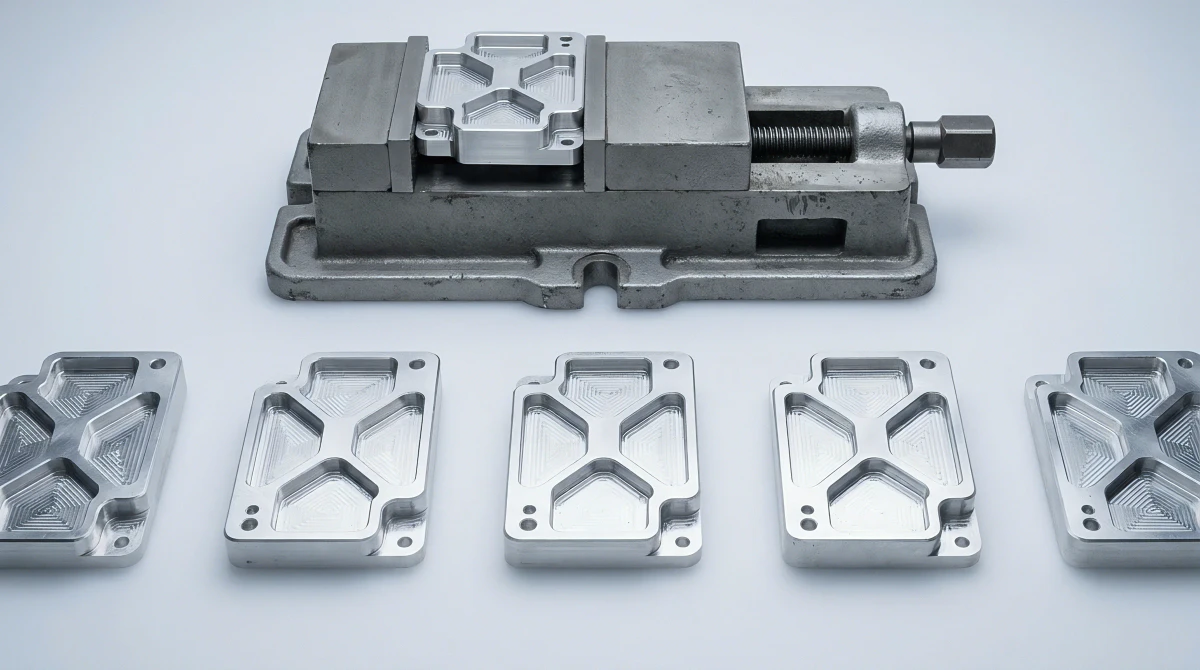
Time per Part

Time per part is the machine time each part of a lot costs, including its share of setup and tool changes.

Every Time per Part article of the Metal CNC Resources, newest first, each written from published standards, research and makers’ data.

Meaning

Time per part is the machine time each part of a lot costs, including its share of setup and tool changes. Cutting time alone flatters a high cutting speed and a small lot. The full figure is the one to compare between plans.

Cutting Share

In an assumed tool life case, a part needs 4.0 minutes in the cut at 200 m/min (656 ft/min). At 260 m/min (853 ft/min) it needs 3.08 minutes. Cutting time per part on one edge is the denominator of the parts-per-edge count.
Read More

Tool Change Share

The number to compare is the time per part including the share of every tool change. With a change of 3 minutes, a lot of 1,000 runs 4,300 minutes at the lower speed and 3,539 at the higher. That is 4.3 and about 3.5 minutes per part. At 17 minutes per change, the two speeds break even.

Setup Share

The changeover study set setup totals of 207 and 89 minutes against an example run of 10 minutes per part. A lot of 5 carries 41.4 minutes of setup per part at the longer total and 17.8 at the shorter. A lot of 50 carries 4.1 and 1.8 minutes, and a lot of 200 about 1.0 and 0.4. For lots of five to twenty parts, the setup is the larger number. These figures describe the study’s changeover, not another shop’s. A quantity that runs in under an hour of cutting is a day of calendar time driven by changeover, inspection and waiting.

Cycle Time of a Machined Part From Program to Time per Part

Time per part is cutting, moving, changing and handling plus the lot's share of setup, so check what a quoted cycle time includes before comparing.

What Makes Up the Cycle Time of a Machined PartA CNC program's time has three machine components. Autodesk's help for the machining time tool in its CAM software defines the estimate as the sum of feed time, the time for non-cutting traverse moves at the machine's fastest rate, and tool-change time, and it reports each with its distance and the number of tool changes.
How Setup Time Sets the Lot Size of a Machined Run

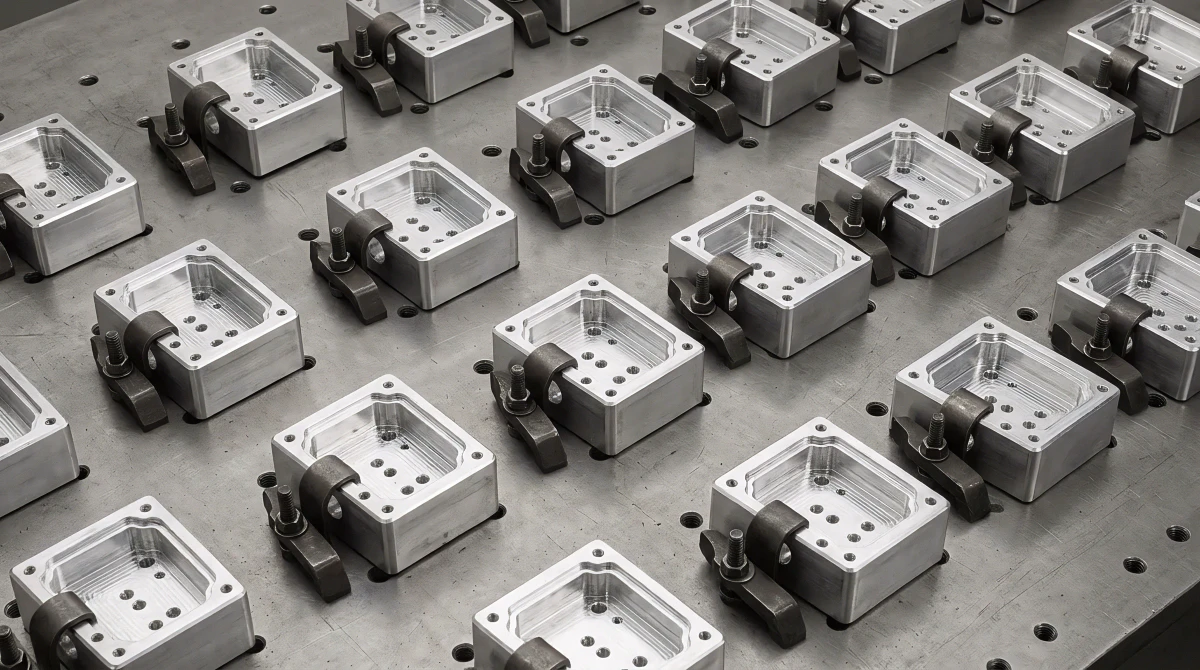
Setup is paid once per lot, so in lots of five to twenty parts the changeover sets the calendar and lot size decides how many parts share it.

What a Setup Contains Before the First Good PartThe study names nine groups of activity that the changeover consisted of, in the order they were done. Removing the fixture from the previous job came first, then study of the clamping sheet and the drawing, cleaning the machine, clamping the new fixture, positioning the zero point, measuring the tools, clamping the tools into the magazine, producing the first piece, and inspecting it.

How Many Parts One Cutting Edge Makes in a Machined Run

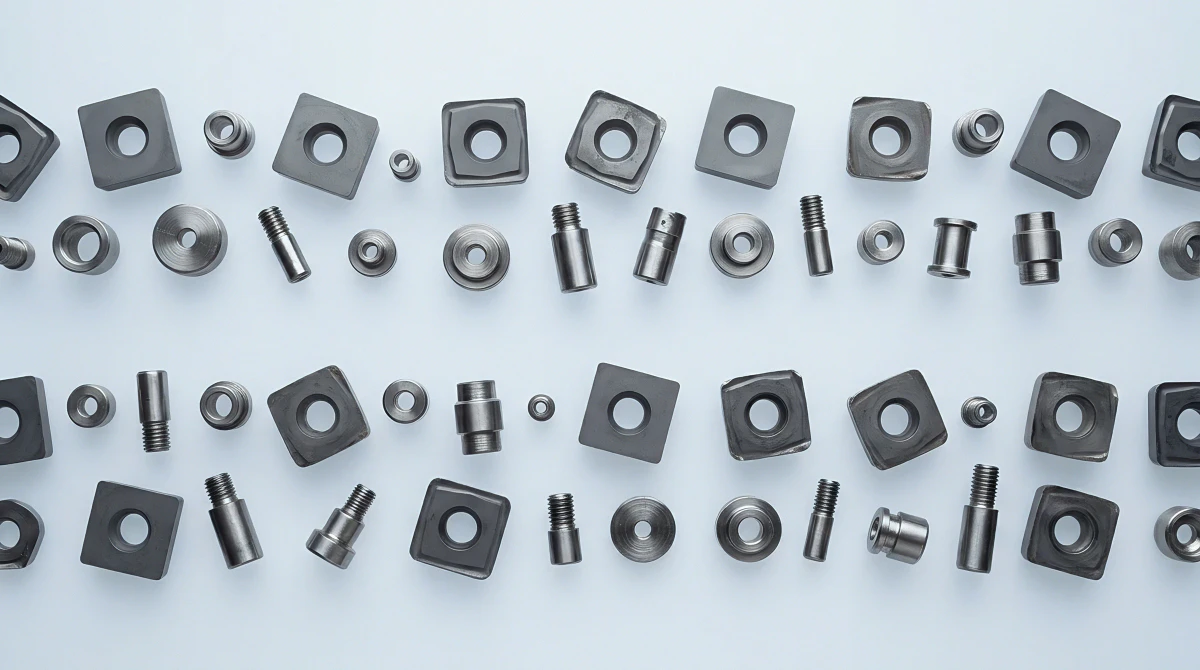
The parts an edge makes equal its minutes of life divided by the minutes each part spends on it, so a faster cycle can use more edges than it saves.

What Decides How Many Parts a Cutting Edge Can MakeParts per edge is a quotient. The numerator is the tool life, the minutes a cutting edge can stay in contact with the workpiece before it reaches the wear criterion.

Request a Metal CNC Quote

Send the 2D drawing and the 3D file, with the quantity and the stage of the project. An engineer replies within 1 working day.

The quote form, the mutual NDA and the private folder for your files are on Protolis Atelier, with Metal CNC chosen.

Request a Quote