Coolant

Coolant is the cutting fluid fed to the cut to carry heat away, lubricate the edge and flush chips from the part.

Every Coolant article of the Metal CNC Resources, newest first, each written from published standards, research and makers’ data.

Meaning

Coolant is the cutting fluid fed to the cut to carry heat away, lubricate the edge and flush chips from the part. Its supply matters most where the metal holds heat at the edge, as titanium and stainless steel do. Its chemistry matters after the cut, when the part goes into a bath or a furnace. A film of it left on the part is a contaminant for every finishing step.

Heat Removal

A dull tool or a starved coolant supply heats a metal whose solidus sits low. The melting range of 7075-T6 starts at 477 °C (890 °F) and that of 6061-T6 at 582 °C (1,080 °F). Titanium conducts only 7.1 W/m·K (4.1 Btu/hr·ft·°F), so the coolant has to carry the heat the part cannot. ATI asks for large amounts of fluid when cutting Grade 5.
Read More

Fluid Choice

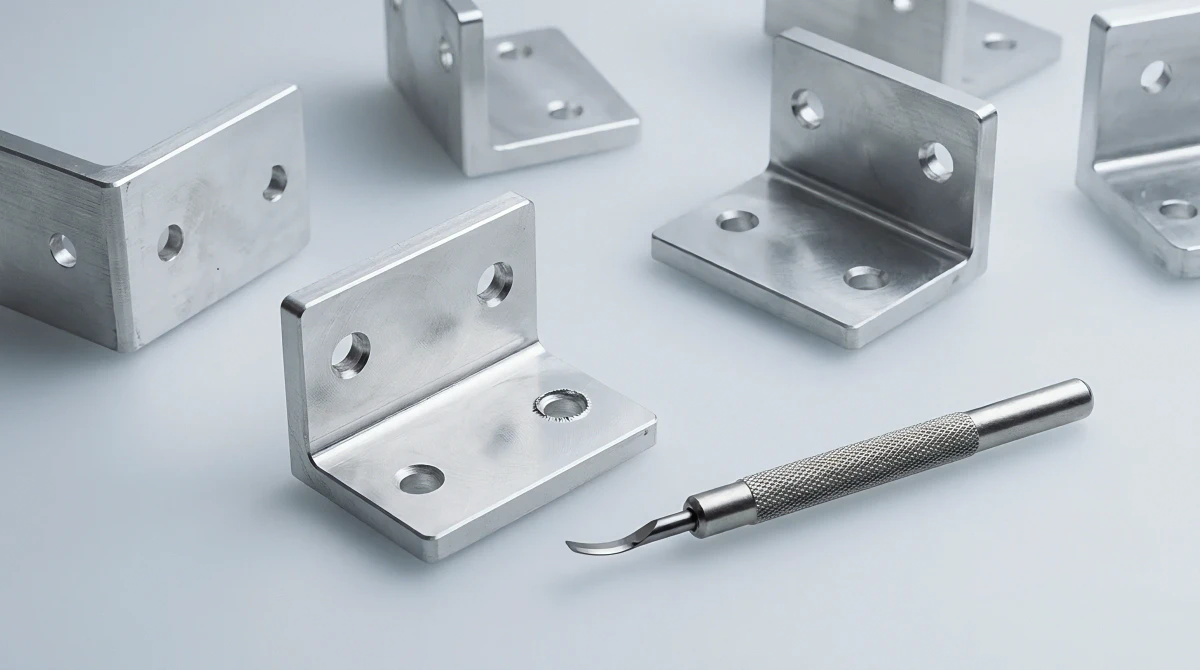
ATI specifies non-chlorinated cutting fluid for Ti-6Al-4V. The reason is that chlorine salts left on stressed parts can cause stress corrosion cracking when the parts are later heated. The review of burr formation on aluminum lists coolant among the measures that reduce burr size. It also notes that for certain materials a lubricant hardens burrs and complicates deburring.

Residue on the Part

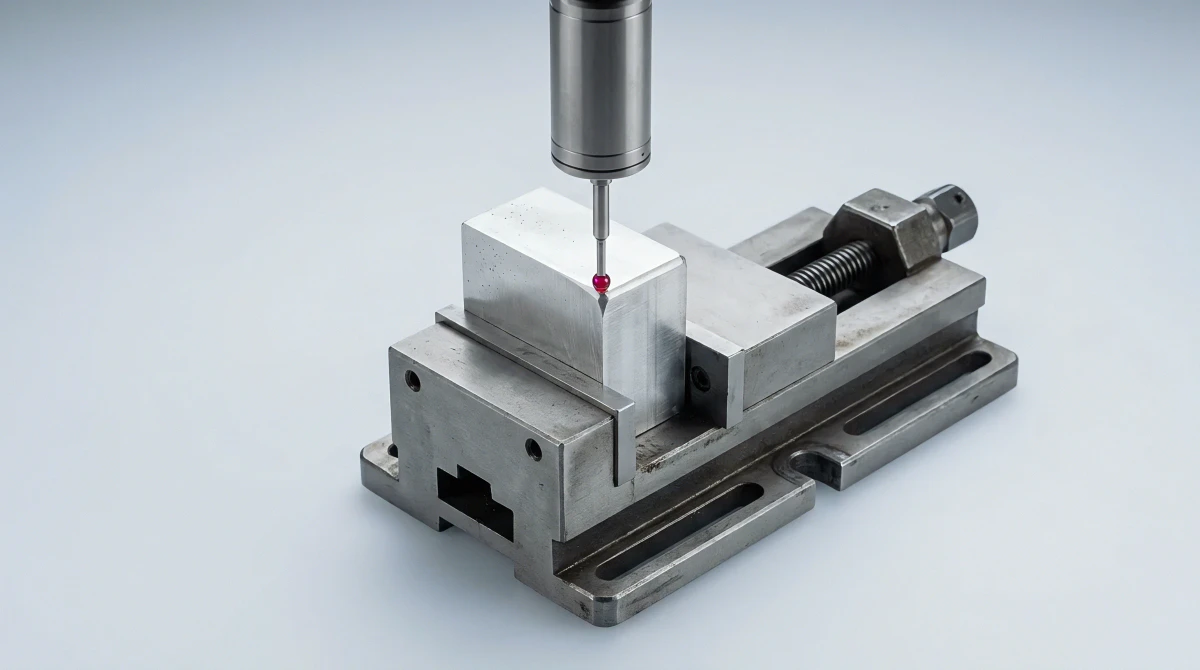
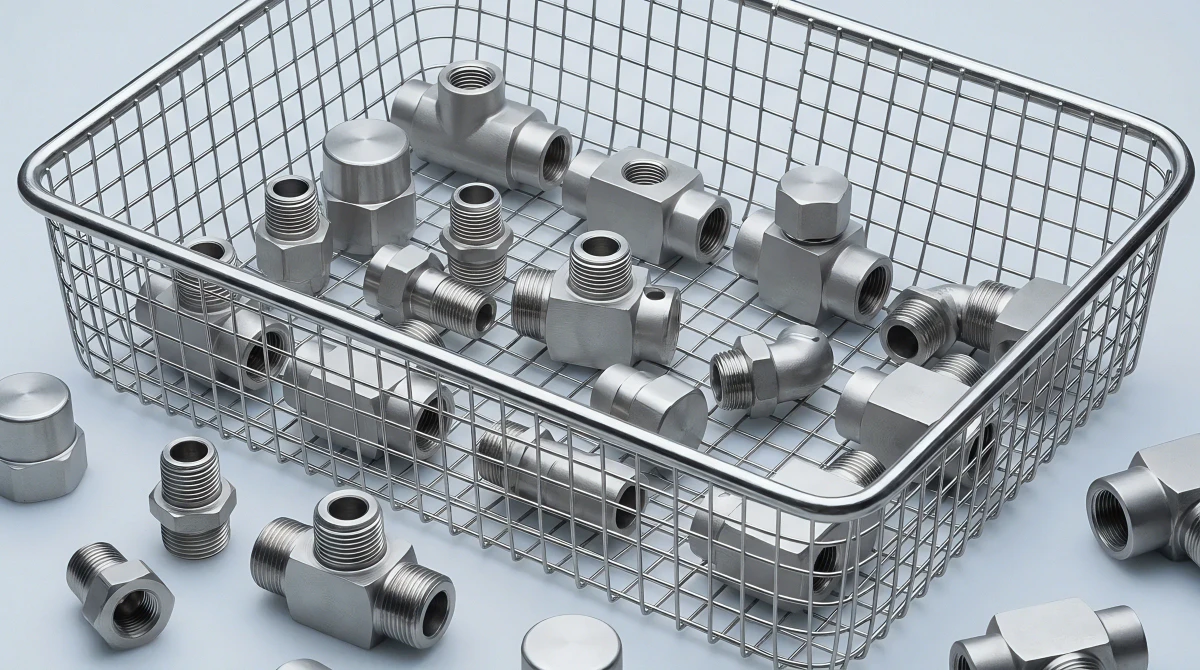
A part cut from bar with a coolant that evaporates to a film is not ready for passivation. The film keeps the acid from reaching the metal, so oil and coolant come off first. In the machine, a part wet with coolant gives a probe a different surface than the drawing describes. Renishaw rates its RMP60 probe for water, oil and coolant, but the part still needs a clean surface.

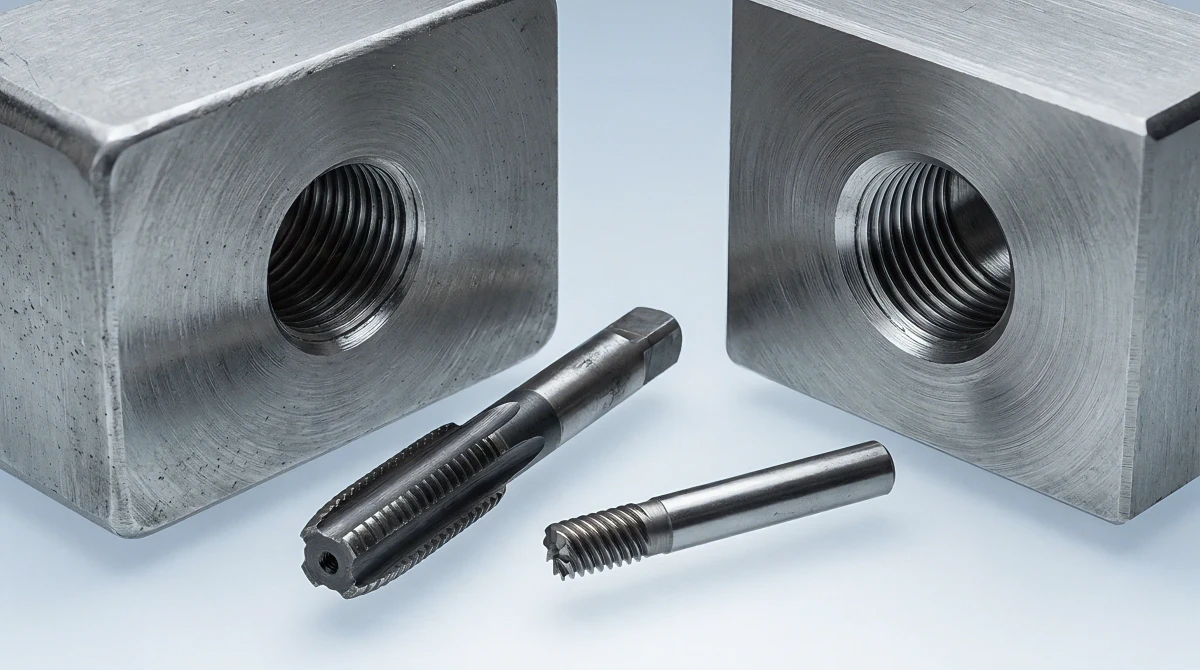
Thread Milling and Tapping Internal Threads in Metal Step by Step

An internal thread is decided at the drill, so gauge the minor diameter, size the drill to the engagement, then tap or mill with the entry and feed checked.

Tapping or Thread Milling for an Internal ThreadBoth methods start from the same drilled hole and end at the same gauge, and they differ in how the thread form gets into the wall. A tap cuts or forms the whole thread in one axial stroke, its size fixed by the tool.
Roughing and Finishing Passes in CNC Milling From Stock to Final Size

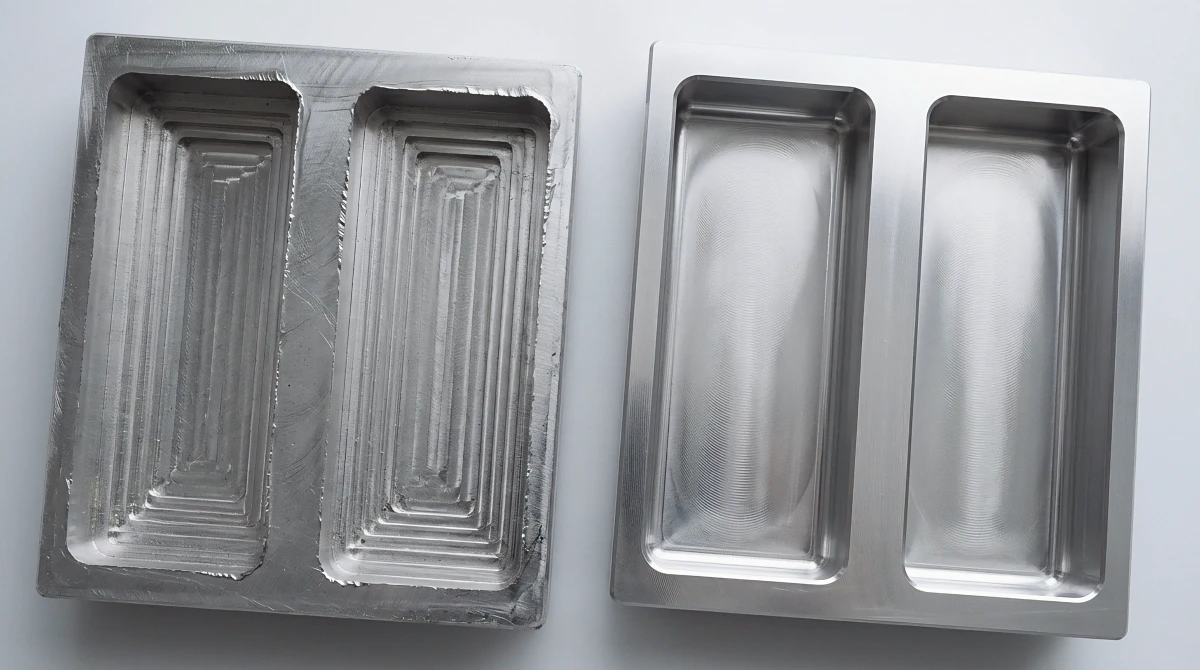
Rough to an even allowance, program the feed for the chip each pass really makes, and finish with a small constant depth so size depends on the tool, not the stock.

Roughing to Finishing in Milling, Pass by PassA milled part rarely reaches its size in one cut. The material is removed in stages, each with its own job, its own tool and its own engagement, and each leaves the next a predictable amount of stock.

Surface Roughness Ra by Machining Operation From Roughing to Grinding

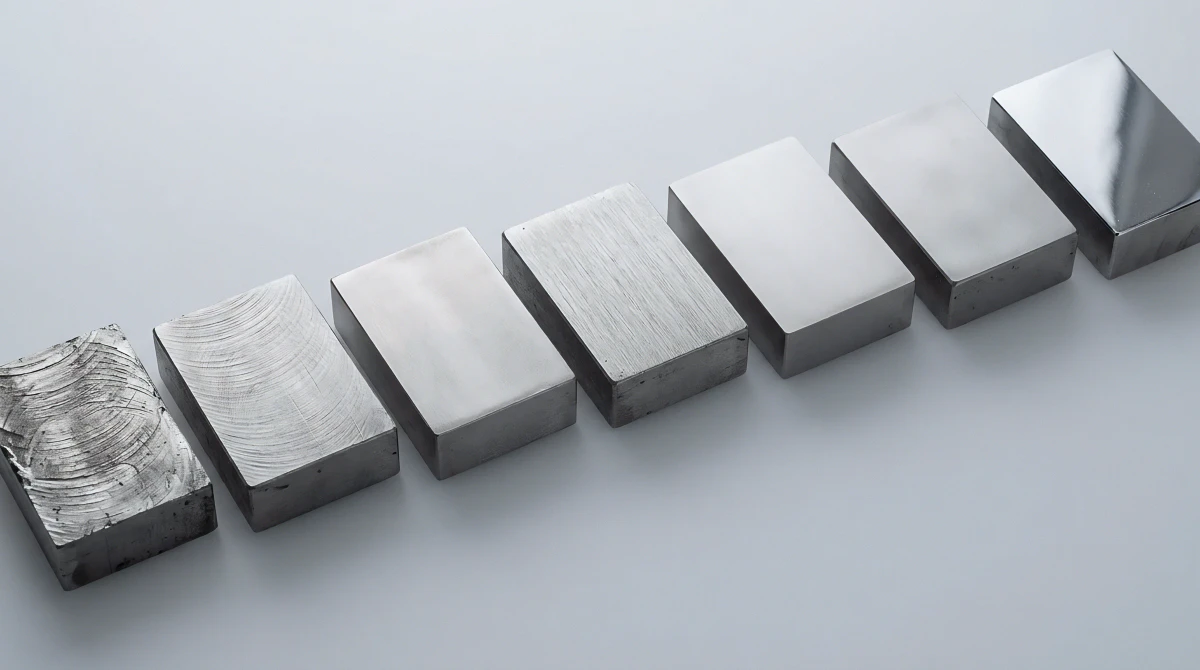
The feed and nose radius of the last pass set the finish, so pick the process from the Ra band and measure with the cutoff the profile calls for.

Typical Ra From Turning, Milling and GrindingEach process leaves its own range. Keyence, a maker of roughness and profile instruments, publishes typical Ra values for finishing operations and stresses that real results depend on material, tooling and parameters.

How Many Parts One Cutting Edge Makes in a Machined Run

The parts an edge makes equal its minutes of life divided by the minutes each part spends on it, so a faster cycle can use more edges than it saves.

What Decides How Many Parts a Cutting Edge Can MakeParts per edge is a quotient. The numerator is the tool life, the minutes a cutting edge can stay in contact with the workpiece before it reaches the wear criterion.

Setting Work Offsets With a Touch Probe Inside the Machine

A probe writes the part's datum into the work offset, so its calibration, its limits and its re-probe points decide how far the first parts can be trusted.

How a Probe Sets a Work Offset Before the First CutThe sequence on a machining center runs the same way for most parts. A probe is loaded in the spindle like a tool, and the control treats it as one.

How Burrs Form on Machined Aluminum and How They Come Off

A burr is the last chip, so its size follows the alloy, the temper and the tool, and a signed edge size on the drawing turns it into a measurement.

Why a Cutting Tool Leaves a Burr on AluminumA burr is a projection of material beyond the workpiece limits. Its opposite is a negative burr, a missing portion of the edge where material broke away instead of being pushed.

ASTM A967 Passivation for Machined Stainless Steel Parts

ASTM A967 names the baths and the lot tests for passivated stainless parts, and the drawing has to name the treatment, test and edition it wants.

What ASTM A967 Covers and What It Does NotASTM A967/A967M covers chemical passivation treatments for stainless steel parts, along with recommendations and precautions for descaling, cleaning and passivating. The abstract names three families of treatment: immersion in a nitric acid solution, immersion in a citric acid solution, and an electrochemical treatment.

Machining Ti-6Al-4V Grade 5 Titanium

Titanium cuts slowly because it holds heat at the tool and flexes under load, and its condition and cleanliness after the cut matter as much as the cutting data.

Ti-6Al-4V Grade 5 as a Machined MaterialGrade 5 is a two-phase alpha plus beta titanium alloy, with aluminum as the alpha stabilizer and vanadium as the beta stabilizer, and ATI calls it the most widely used titanium grade. The ASTM B348 composition limits for bar, printed by voestalpine, are 5.50 to 6.75 % aluminum, 3.50 to 4.50 % vanadium, 0.20 % oxygen at most, 0.40 % iron at most, 0.08 % carbon at most, 0.05 % nitrogen at most, 0.015 % hydrogen at most, and 0.10 % for any other element, 0.40 % in total.

Request a Metal CNC Quote

Send the 2D drawing and the 3D file, with the quantity and the stage of the project. An engineer replies within 1 working day.

The quote form, the mutual NDA and the private folder for your files are on Protolis Atelier, with Metal CNC chosen.

Request a Quote