Yield Strength

Yield strength is the stress at which a metal starts to deform permanently, taken at a 0.2 % offset strain.

Every Yield Strength article of the Metal CNC Resources, newest first, each written from published standards, research and makers’ data.

Meaning

Yield strength is the stress at which a metal starts to deform permanently, taken at a 0.2 % offset strain. A part that has to stay elastic is designed against it, not against ultimate strength. It moves with temper and temperature more than ultimate strength does.

Aluminum

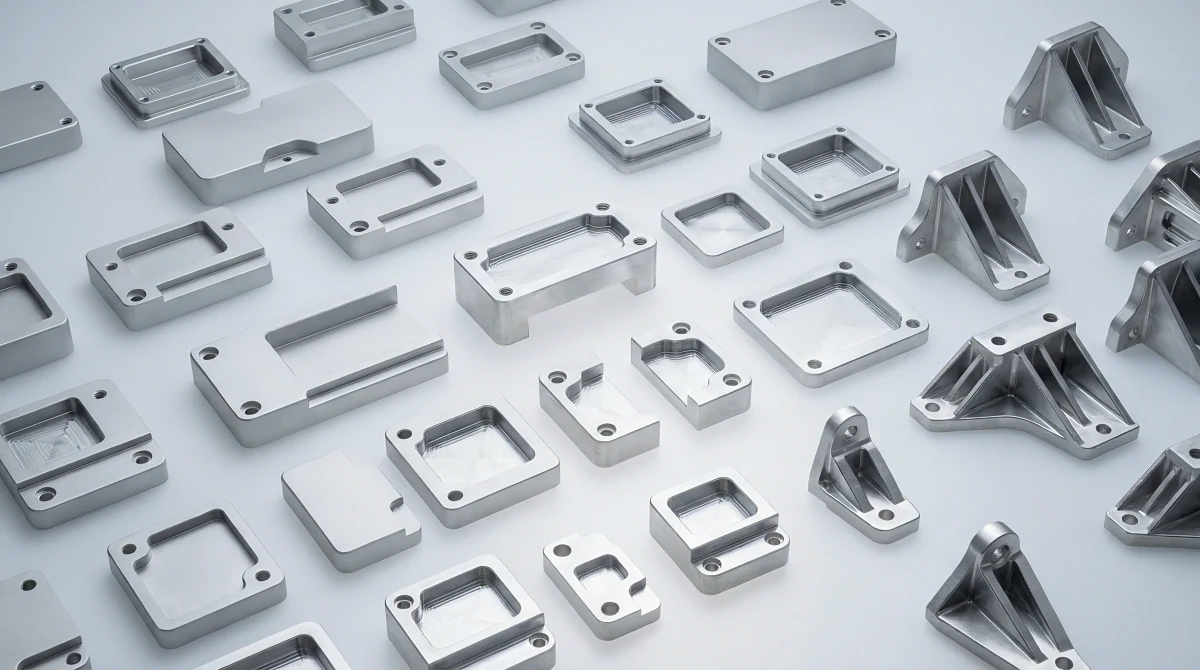
ASM gives 6061-T6 a typical yield strength of 276 MPa (40,000 psi) and 7075-T6 one of 503 MPa (73,000 psi). The 7075 figure runs about 1.8 times higher, the same ratio as for ultimate strength.
Read More

Stainless

Ugitech gives 303 bar over 1 in. a minimum yield of 206 MPa (30 ksi). ASTM A240 sets the same 207 MPa (30 ksi) as the minimum for 316 plate. The typical value for 316 at 21 °C (70 °F) is 291 MPa (42.2 ksi). Strength never decides between 303 and 316, since their minimum yields match.

Titanium

Voestalpine gives annealed Grade 5 a yield of 830 to 1000 MPa (120 to 145 ksi). ASM’s ELI print gives 790 MPa (115,000 psi) for Grade 23.

Hot Service

Between room temperature and 538 °C (1,000 °F), the typical yield of 316 falls by 45 %. It drops from 291 to 161 MPa (42.2 to 23.4 ksi). Its tensile strength falls only 17 % over the same range. A 316 part in a hot process stream keeps its tensile strength better than its yield. A design that depends on staying elastic reads the yield column.

Machining C36000 Free-Cutting Brass for Turned Parts

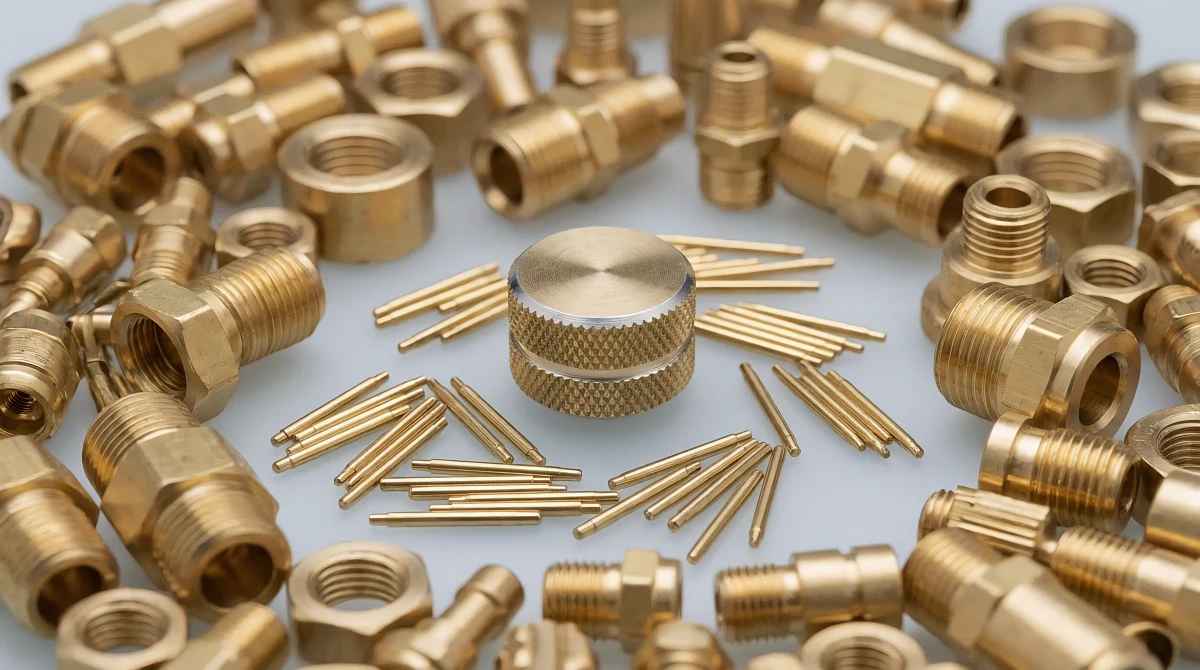
C36000 cuts so freely that spindle speed, chip control and finish usually set the cycle, so name the temper, the specification and any later joining on the order.

What Makes C36000 the Reference Brass for Turned PartsC36000 is a leaded copper-zinc alloy built to be cut. The Copper Development Association's data page gives its composition as 60.0 to 63.0 % copper, 2.5 to 3.0 % lead, iron at 0.35 % maximum and zinc as the remainder, with copper plus the named elements at 99.5 % minimum.
Machining Ti-6Al-4V Grade 5 Titanium

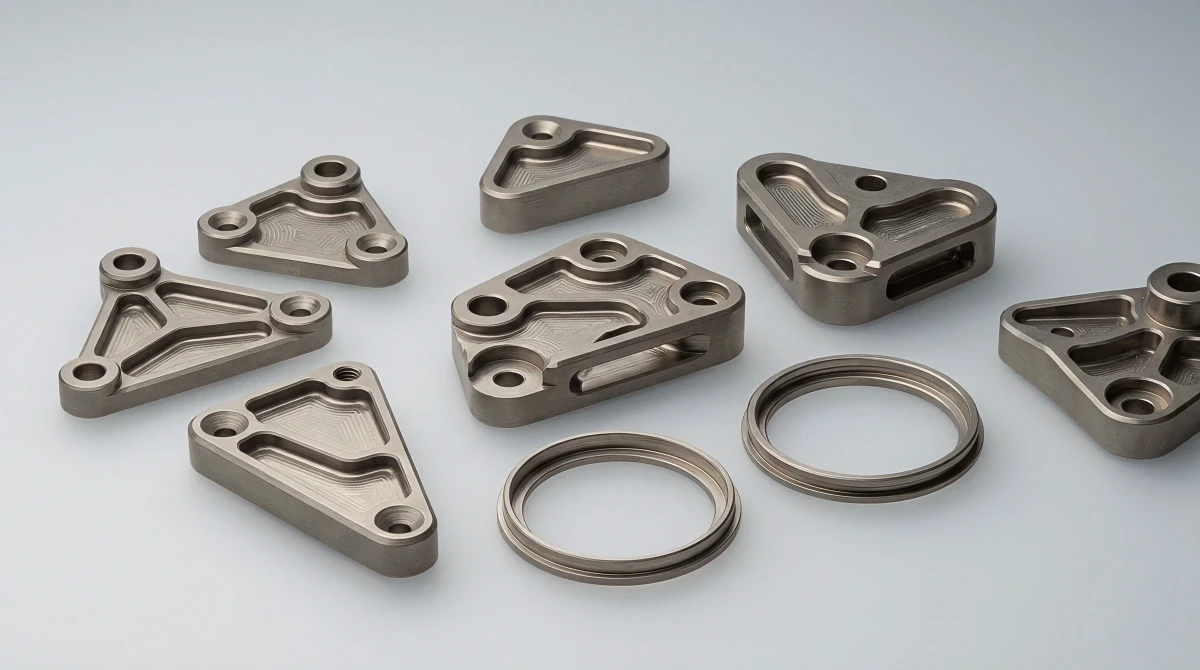
Titanium cuts slowly because it holds heat at the tool and flexes under load, and its condition and cleanliness after the cut matter as much as the cutting data.

Ti-6Al-4V Grade 5 as a Machined MaterialGrade 5 is a two-phase alpha plus beta titanium alloy, with aluminum as the alpha stabilizer and vanadium as the beta stabilizer, and ATI calls it the most widely used titanium grade. The ASTM B348 composition limits for bar, printed by voestalpine, are 5.50 to 6.75 % aluminum, 3.50 to 4.50 % vanadium, 0.20 % oxygen at most, 0.40 % iron at most, 0.08 % carbon at most, 0.05 % nitrogen at most, 0.015 % hydrogen at most, and 0.10 % for any other element, 0.40 % in total.

Machining 303 and 316 Stainless Steel

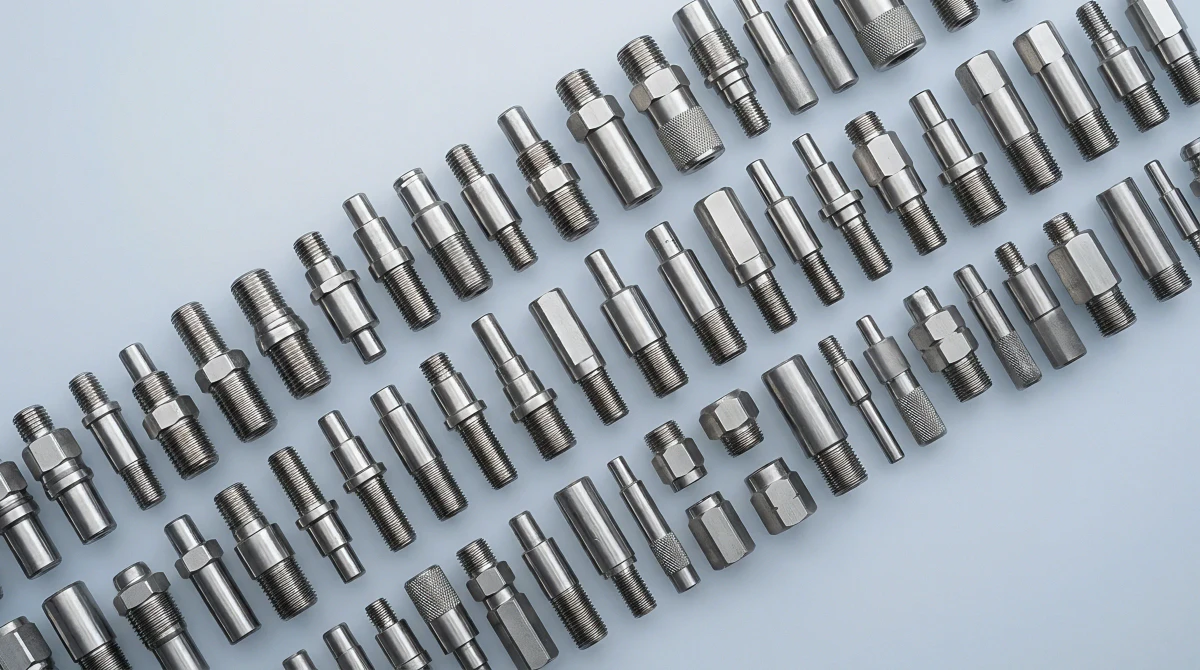
Stainless grade choice for a machined part is a trade between how freely it cuts and how well it resists the environment it works in.

Choosing 303 or 316 for a Machined Stainless PartThe choice sits on one trade. 303 is the free-machining modification of the basic 18 % chromium, 8 % nickel stainless, and it is produced to cut well.

Request a Metal CNC Quote

Send the 2D drawing and the 3D file, with the quantity and the stage of the project. An engineer replies within 1 working day.

The quote form, the mutual NDA and the private folder for your files are on Protolis Atelier, with Metal CNC chosen.

Request a Quote