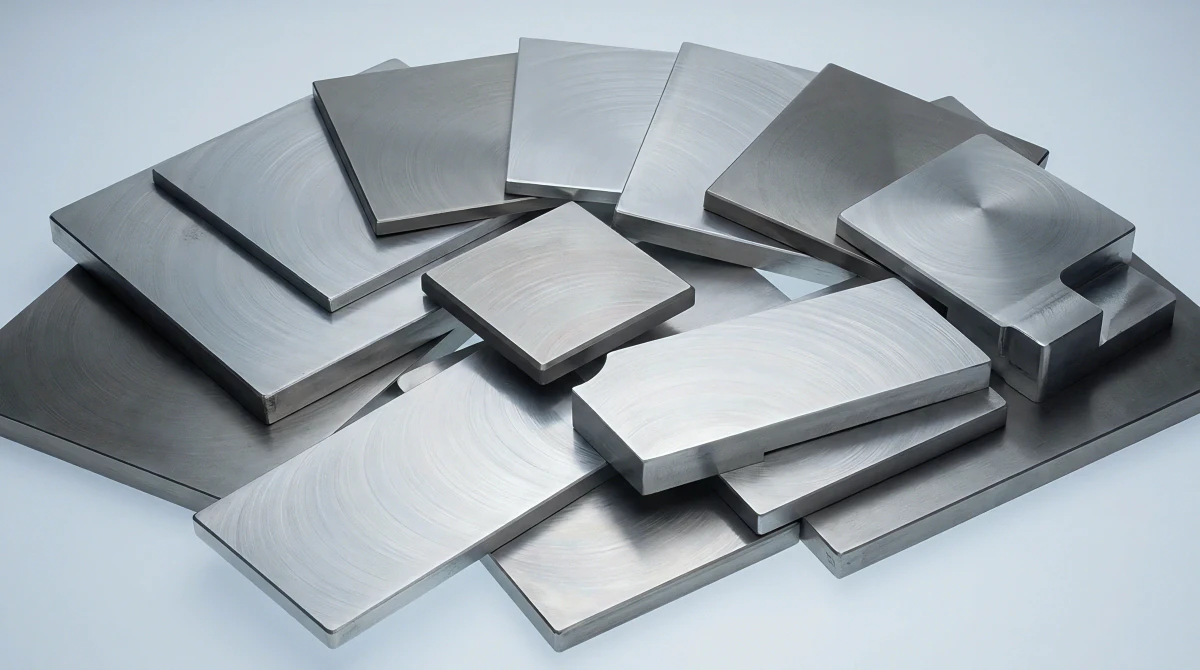
Stress Relief

Stress relief is a treatment that lowers residual stress, by stretching aluminum plate at the mill or by heating a titanium part.

Every Stress Relief article of the Metal CNC Resources, newest first, each written from published standards, research and makers’ data.

Meaning

Stress relief is a treatment that lowers residual stress, by stretching aluminum plate at the mill or by heating a titanium part. Quenching locks stress into stock as the surface sets before the core. Cutting a pocket releases that stress unevenly, and the part moves. Stress relief makes the movement smaller, without promising that it disappears.

Stretching at the Mill

An aluminum temper chart defines T651 as stress relieved by stretching, for plate and rolled bar. A paper abstracted by ASM on 7075 states that a later stretching step relieves the stress produced by quenching. Its authors measured the stress through the thickness by removing layers. They also found a difference between the distortion measured and the stress calculated. Stress relief therefore reduces the risk of a bowed part without removing it.
Read More

Heating a Part

ATI prints a stress relief anneal for Ti-6Al-4V of 538 to 649 °C (1,000 to 1,200 °F) for 1 to 8 hours. Zapp gives about 500 to 650 °C (932 to 1,202 °F). Both treat it as a step for the part, below the annealing range. The furnace atmosphere matters, since the alloy picks up oxygen, nitrogen and carbon when heated in air.

Sequence

Thin or flat parts are often roughed, relieved and only then finished. Whatever stress the roughing frees comes out before the finishing cut. The data sheets do not prescribe that order. The drawing or the shop’s process plan names it. Without a trial cut, nothing in the opened sources says how much of a flatness allowance the stock stress takes.

Flatness of Machined Metal Plates

A plate's measured flatness depends on the stress in its stock, its temperature and its support, as well as on the cut that finished it.

What Flatness General Tolerances AllowA machined plate leaves the mill with faces cut flat. Where the drawing gives a face no flatness of its own, ISO 2768-2 sets the tolerance it is held to.
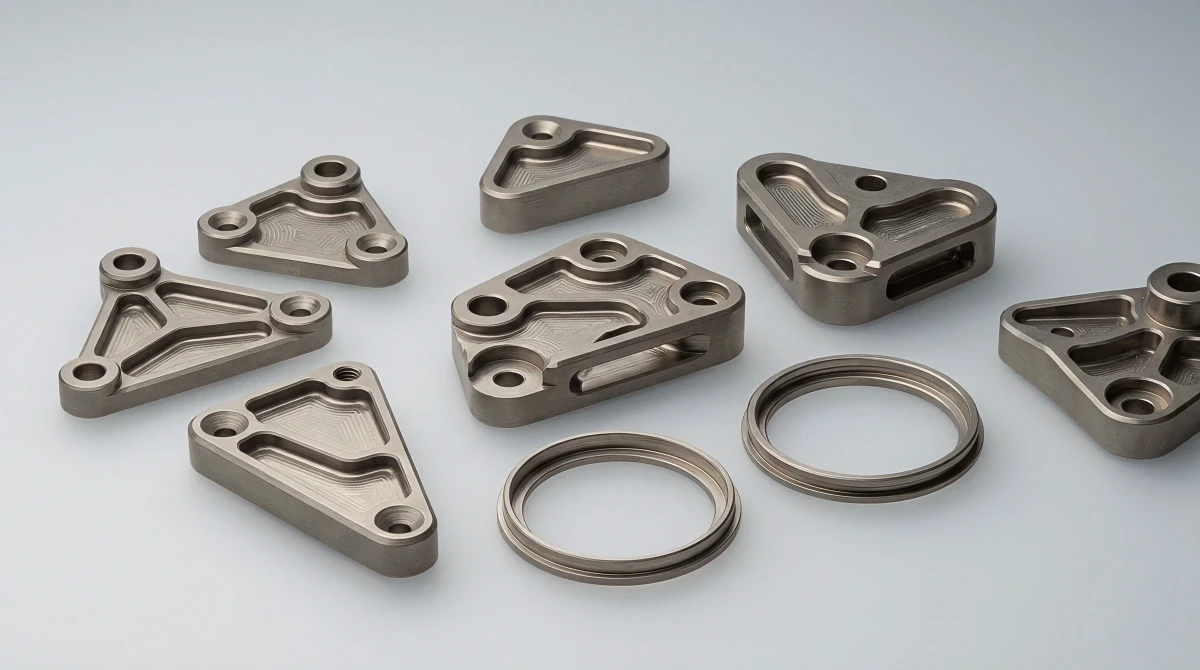
Machining Ti-6Al-4V Grade 5 Titanium

Titanium cuts slowly because it holds heat at the tool and flexes under load, and its condition and cleanliness after the cut matter as much as the cutting data.

Ti-6Al-4V Grade 5 as a Machined MaterialGrade 5 is a two-phase alpha plus beta titanium alloy, with aluminum as the alpha stabilizer and vanadium as the beta stabilizer, and ATI calls it the most widely used titanium grade. The ASTM B348 composition limits for bar, printed by voestalpine, are 5.50 to 6.75 % aluminum, 3.50 to 4.50 % vanadium, 0.20 % oxygen at most, 0.40 % iron at most, 0.08 % carbon at most, 0.05 % nitrogen at most, 0.015 % hydrogen at most, and 0.10 % for any other element, 0.40 % in total.

Request a Metal CNC Quote

Send the 2D drawing and the 3D file, with the quantity and the stage of the project. An engineer replies within 1 working day.

The quote form, the mutual NDA and the private folder for your files are on Protolis Atelier, with Metal CNC chosen.

Request a Quote