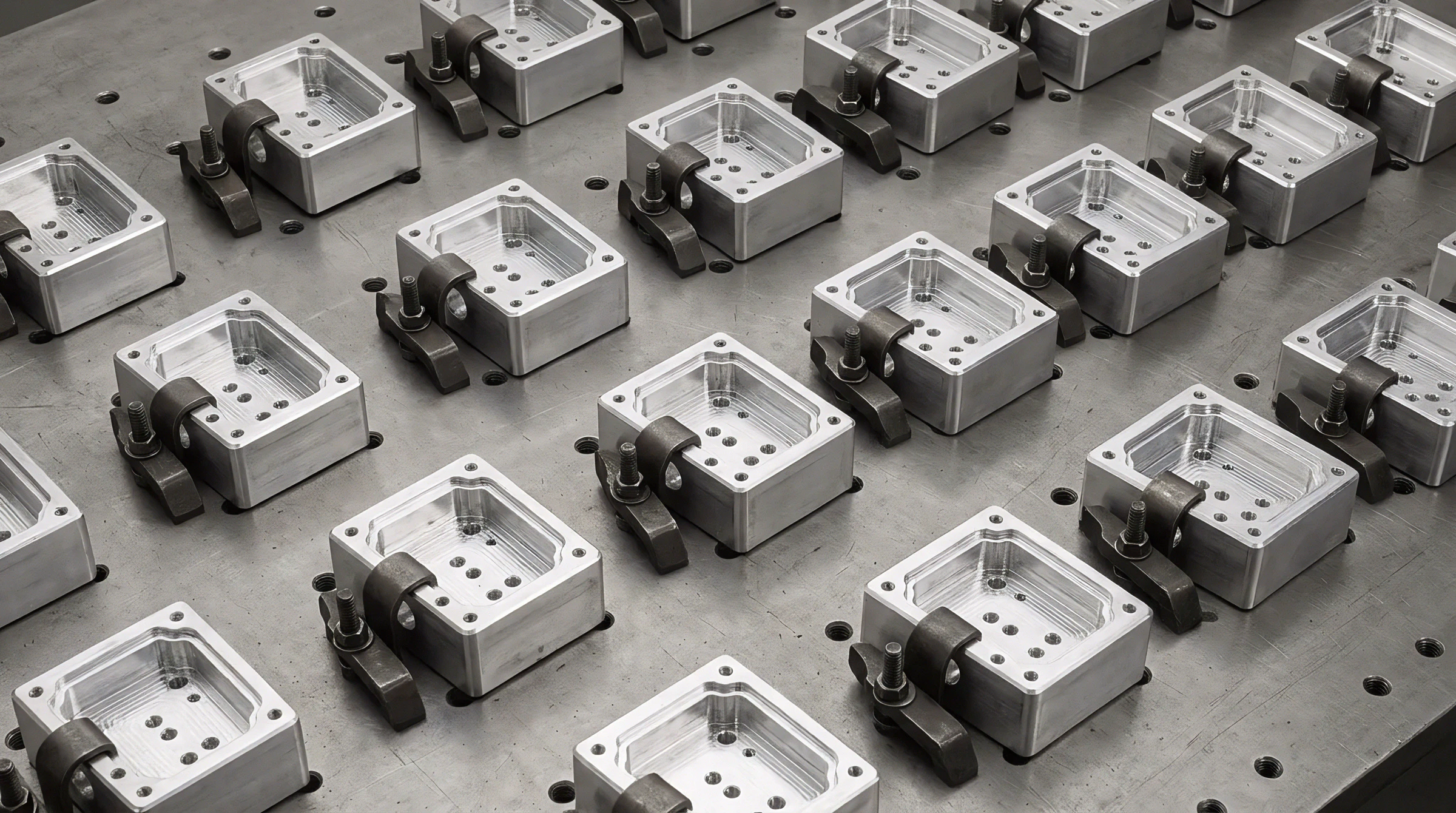
A stopwatch on the changeover of a five-axis machining center in a Slovak engineering firm read 3 hours 26 minutes 32 seconds, and the longest single item in it was not cutting. The first piece of the new product spent 58 minutes 26 seconds waiting to be inspected. A published study from 2025 timed every step of that changeover from video, and its list reads like the front half of any small machined run: find the sheets, fit the fixture, set the zero point, measure the tools, cut one piece, wait for the verdict.
Setup is the cost a lot pays once, whatever its size, and the lot size decides how many parts share it. Its measured times below show what a setup contains, how much of it stops the machine, how it spreads over a lot of 5, 50 or 200 parts, and which changes in the shop shorten it. Cost and revenue figures from the study are left out, since the point here is time.
What a Setup Contains Before the First Good Part
The study names nine groups of activity that the changeover consisted of, in the order they were done. Removing the fixture from the previous job came first, then study of the clamping sheet and the drawing, cleaning the machine, clamping the new fixture, positioning the zero point, measuring the tools, clamping the tools into the magazine, producing the first piece, and inspecting it.
Two classes of activity run through the list. Internal activities happen while the machine stands still: the fixture comes out and goes in, the zero point is found, the first piece is cut. External activities can happen while the machine is cutting something else: finding the program and tool sheets, picking tools, measuring them, preparing the fixture. The SMED method, the single-minute exchange of die, starts by separating the two and then moves as much as possible from internal to external.
A setup has two clocks. The internal clock stops the spindle and sets the lot’s minimum run time, and the external clock stops only the people.
The distinction decides how a small lot is planned. If every setup activity were external, a lot of five parts could follow another with no gap. When much of it is internal, five parts cost a stopped machine for hours.
The Machine and the Product in the Study
The machine was a HERMLE B 300 U, a five-axis vertical machining center with a Heidenhain iTNC 530 control, spindle speeds to 15,000 rpm, a tool magazine of five tools, a rotary swiveling table of 280 mm diameter and travels of 800 mm in X, 600 mm in Y and 500 mm in Z. Small and medium batches and custom components are the firm’s work, so the changeover studied is the one a small-lot order meets on the shop floor.
Where Three and a Half Hours Went
Each activity was timed from video and put into internal or external time. The totals were 1 hour 52 minutes 33 seconds of internal time and 1 hour 33 minutes 59 seconds of external time, which adds up to about 207 minutes.
| Activity | Time | Class |
|---|---|---|
| Waiting for the first product to be inspected | 58 min 26 s | Internal |
| Searching for the clamping and program sheet | 41 min 02 s | External |
| Starting and manufacturing the first test product | 15 min 57 s | Internal |
| Editing and checking the program | 10 min 46 s | External |
| Preparing and clamping the workpiece | 10 min 19 s | Internal |
| Searching for the program in the PC and loading it | 8 min 56 s | External |
| Preparing and clamping fixtures into the machine | 8 min 36 s | Internal |
| Defining the workpiece zero point with a probe | 5 min 57 s | Internal |
| Searching for the fixture in the dispensing room | 5 min 20 s | External |
| Searching for tools in the dispensing room and at the machine | 5 min 00 s | External |
Only the activities of five minutes or more were treated as targets, because the study found the shorter ones were already handled efficiently or would be fixed by the standard that came out of the analysis.
The table shows how little of the changeover was metal-cutting work. One test piece took 15 minutes 57 seconds, a probed zero point took 5 minutes 57 seconds, and the rest of the internal time went to fixtures, workpiece clamping, tools and waiting. The single largest internal item was the wait for inspection of the first piece, longer than the piece took to make by a factor of 3.7.
Searching Is Also Setup
On the external side, the biggest item was the search for the clamping and program sheet, 41 minutes 2 seconds, followed by editing and checking the program and by finding the program on a PC and loading it. Searching for fixtures and tools added more. None of that time is cutting or measuring. It is the cost of paperwork and storage that a repeat order could avoid.
How a Fixed Setup Spreads Over a Lot
Divide the setup by the lot and the share per part appears. The study’s standard sheet gives a program run of 10 minutes for its example product, which gives a basis for the arithmetic. These per-part figures use the study’s two totals, 207 minutes before and 89 minutes after the proposed standard, and the 10-minute run as an example. They describe the study’s changeover, not another shop’s.
| Lot size | Cutting time for the lot | Setup per part at 207 min | Setup per part at 89 min |
|---|---|---|---|
| 5 parts | 50 min | 41.4 min | 17.8 min |
| 20 parts | 200 min | 10.4 min | 4.5 min |
| 50 parts | 500 min | 4.1 min | 1.8 min |
| 200 parts | 2,000 min | 1.0 min | 0.4 min |
A lot of 5 spends more than four times its cutting time on setup at the longer total, and a lot of 200 spends about a tenth of it. The same table shows what shortening the setup is worth to a small lot: at 89 minutes the lot of 5 still spends more time on setup than on cutting, but the excess over cutting time is about a quarter of what it was.
That leads to a rule of thumb that needs no price: the smaller the lot, the more its lead time is setup. A quantity that runs in under an hour of cutting is a day of calendar time driven by changeover, inspection and waiting.
For a lot of five to twenty parts, ask how long the setup takes before asking how long a part takes. The setup is the larger number.
Why Lots Get Split and Repeated
The same arithmetic explains two habits of small-lot work. Combining two orders for the same part into one lot saves a changeover, and splitting one order into deliveries costs another. A buyer whose release schedule cuts a lot of 50 into five deliveries of 10 should expect five setups unless the fixture and program sit ready between them.
What Shortens a Setup and What Each Change Saves
The study works through the SMED steps: separate internal and external activities, reduce the internal time, reduce the external time, and minimize the total. It cites the general finding that organizational changes alone, such as preparing tools and fixtures during machine time and making the changeover visible, cut total changeover time by 20 to 30 % without high cost, while technical changes need investment.
| Measure | What changes | Time effect stated in the study |
|---|---|---|
| Zero-point clamping system, fixture and part prepared on a pallet outside the machine | Fixture clamping, workpiece clamping and zero point become one quick exchange | Maker states at least 90 % less time for three activities, a reduction to 3 minutes at most, a saving of about 22 minutes |
| Priority registration for the first piece | Inspector takes the first piece ahead of other work | First-piece check cut to at most 10 minutes, depending on complexity |
| Archive of program, fixture and tool sheets for recurring orders | No search during the changeover | From 41 minutes 2 seconds to under 1 minute |
| Warehouse worker fetches fixtures and tools | Operator stays at the machine | Search time removed from the setter’s list |
| Machine connected to the network for programs | No USB drive and walking | Program arrives at the machine when the programmer finishes it |
The standard sheet that closes the study allots 42 minutes to internal activities and 47 to external ones, which is 89 minutes. Internal time fell from about 113 minutes to 42, so the time the machine is stopped dropped by roughly 63 % while the people’s work moved aside. The external 47 minutes happen while the previous lot is cutting.
What the Zero-Point System Does
A zero-point clamping system fits a fixture on a standard receiving interface, so the fixture, with the part on it, arrives from outside the machine already measured against the interface. The machine’s zero point is then the interface, and the workpiece zero can be found once for a given fixture. Three activities in the study are the ones it replaces: preparing and clamping the fixture, clamping the workpiece and defining the zero point.
For a repeat part, the pallet is the lasting asset. It holds the fixture, the clamped part’s reference and the program’s origin together, and the second lot starts from it.
Setup as a Loss in Machine Utilization
The study frames setup inside overall equipment effectiveness, the indicator that combines availability, performance and quality. It lists six loss categories that pull the figure below 100 %: breakdowns, setup and adjustment, reduced speed, minor stoppages and idling, quality defects, and reduced yield. Setup is the only one of the six that a buyer’s order creates directly, because each new part number and each split delivery adds one.
For the machine in the study, the authors report an average utilization of about 65 % over six years, with the effectiveness curve flat from 2018 to 2023. They read that as room for improvement that changeover work can reach. For a buyer the useful reading is simpler. A shop whose machine stands for a third of the available time between lots is a shop for which every added changeover has a real calendar cost, and the order’s structure decides how many of them there are.
Organizational Changes Come Before Technical Ones
The study’s list of general recommendations for faster changeovers reads as a checklist for any shop and any buyer’s questions:
- standardization of changeover operations and of machines;
- visualization of the changeover process;
- parallel execution of operations;
- quick clamps and automatic tools;
- automation of the changeover itself;
- a changeover team with named roles.
Video analysis of the real changeover was the study’s first step, and the standard sheet that closed it names a responsible person for every line: foreman, sorter, warehouse worker, controller. A shop that has written such a sheet for a part can quote its setup in minutes by line, not by feel.
The First Piece Inside the Setup
The first piece has its own place in the study. Starting and producing the first test product took 15 minutes 57 seconds, and waiting for its inspection 58 minutes 26 seconds. The proposal reduces the wait to a registered priority of at most 10 minutes and adds a 5 minute correction step, and the standard sheet shows 15 minutes for the first piece, 10 for inspection and 5 for correction.
That is the point where setup and first article inspection meet. A shop that sets its first-piece inspection on a priority queue gets a lot started in minutes, and a shop whose inspection room is busy leaves the machine standing. When a buyer’s order requires a formal first article report, the report’s measurement is longer still, and the buyer’s schedule belongs to the measuring room as much as to the spindle.
The probing of the zero point appears in the study as 5 minutes 57 seconds and as a 6 minute step in the standard. A probe cycle is short, and what sets its time is whether the fixture and the part sit in a known position.
Limits of the Study’s Numbers
One machine, one product family and one firm make the 207 and 89 minute totals a case, not a rule. The 89 minutes are a projection from the standard sheet and the maker’s statement for the zero-point system, estimated by the authors before a long run proved them, and the authors’ own wording speaks of proposed measures and estimated savings. Measured time is the 207 minutes, and planned time is the 89. A buyer comparing quotes should ask which kind of number a shop is giving.
Other shops will have shorter or longer starts. A changeover on a machine with a pallet system, a part held in a standard vise, or a part that repeats weekly can take far less than 207 minutes, while a first lot of a complex part with a new fixture can take more. The method carries over, which is to time each step, separate the internal from the external ones, and look at the largest items first, and the figures do not.
What a Buyer Can Read From a Lot Plan
Three questions about a quote or a schedule follow from the study’s numbers, and a list of what to look for follows them.
- How many changeovers does the plan contain, counting every split delivery?
- Does the shop keep fixtures, programs and tool lists for a repeat part, or rebuild them each time?
- Who inspects the first piece, and how long does the machine wait for that decision?
- Repeat orders. A part that returns is cheaper in time than a new one when its fixture, program and sheets were filed at the first run.
- Lot size. Lots of 5 to 20 parts are dominated by setup in the study’s numbers, so a few more parts in the first lot cost little time and save a changeover.
- Release in pieces. Splitting a quantity into several deliveries multiplies setups unless the setup is kept on a pallet between them.
- First-piece check. A defined inspection step after the first piece shortens the wait and gives the buyer the first-article record.
A setup is not touched only once. The tool life of each cutter decides how often the run stops for an insert change and a tool offset check, so a long lot carries small setups of its own inside it, and the inspection plan records the first part after each one.
Where a part has to arrive in a few lots, low-volume CNC machining plans the setups first and the cutting second, and the filed fixtures and programs carry over into bridge production.
Sources and Further Reading
- Erika Sujová, Daniela Vysloužilová, Proposal for Streamlining the CNC Machine Changeover Process Through the Application of the SMED Method, Management Systems in Production Engineering 33(3), 2025, pages 451 to 457, DOI 10.2478/mspe-2025-0044