Meaning
Cutting force is the load a tool puts on the work to shear off the chip. It rises with the hardness of the work and the wear of the tool. It bends thin walls and loads the setup. It also tells a shop what is happening at the edge, because force and burr move together.Signal Value
The burr review states that burr formation depends highly on chip formation, so cutting force is a signal. In the slot-milling studies it cites, exit burr thickness followed the changes in tangential cutting force. A shop that watches force therefore watches the burr it is about to make.Read More
Effect of Wear
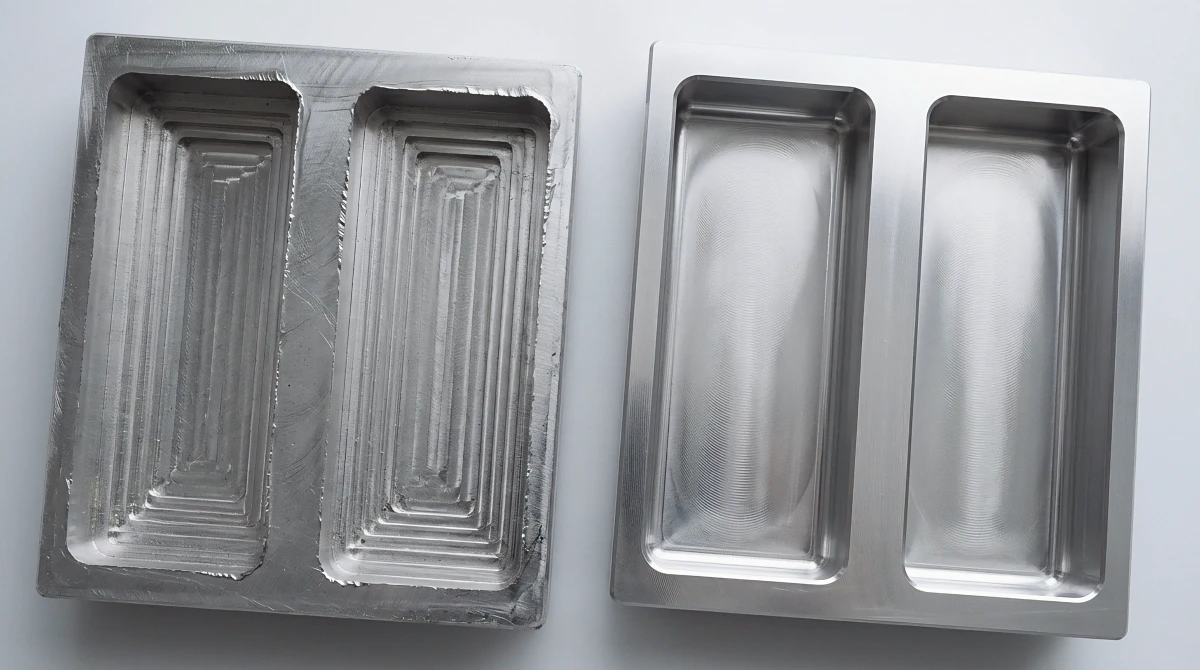
A worn edge raises cutting force. In aluminum machining studies, a worn tool gave larger entrance burrs and bigger burrs overall. Wear therefore shows up in the part before it shows in the tool. The edge condition on the last part of a tool’s life is not the edge condition on the first.Effect of Hardness
In the burr review’s A356 case study, the peak-aged condition gave the smallest burrs. Its harder matrix resisted deformation, so the metal cut instead of folding over. A low burr and a high cutting force arrived together. For titanium, ATI asks for rigid tooling. The alloy is strong, and its modulus of 114 GPa (16.5 × 10⁶ psi) lets a setup flex.Effect on the Axes
Cutting forces also reach the machine. HEIDENHAIN lists them among the factors that shape a ball screw’s temperature profile, with nut wear, feed rate and the part of the traverse used. A thermal model in the control cannot see them, which is why its residual error can reach 50 µm/m (50 µin/in).